Strategic Reward System: A Tool to Invigorate Employee Performance

Downloads
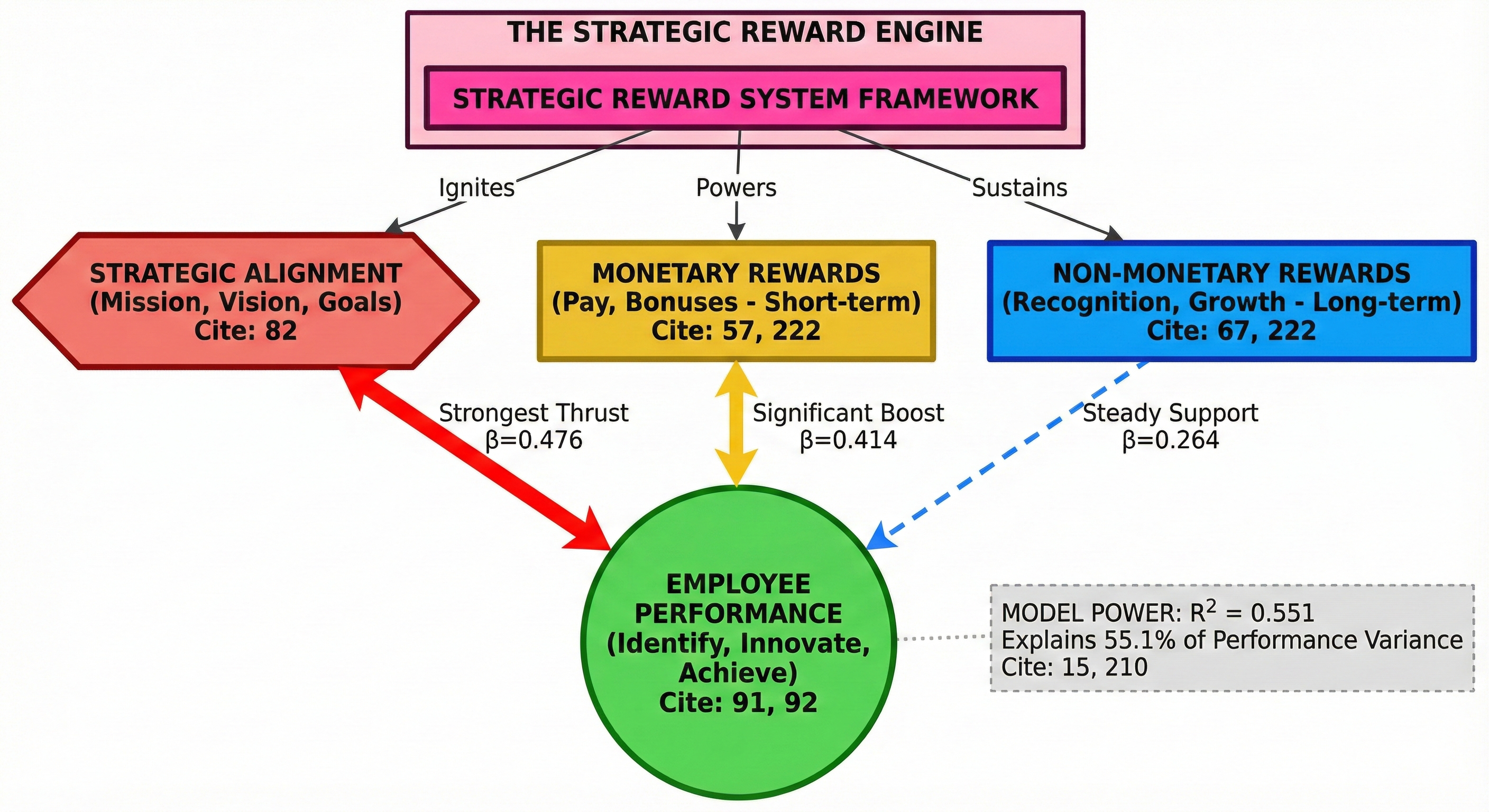
This study investigates the impact of strategic reward systems on employee performance in selected organizations in Ado Ekiti, Nigeria. The research focuses on a key dimension: strategic alignment (SA). Guided by Expectancy Theory, Equity Theory, Goal-Setting Theory, and Herzberg’s Two-Factor Theory, the study examines how these components influence employee motivation and performance. A quantitative, cross-sectional design was employed, with data collected from 178 employees across Afe Babalola University (ABUAD) and Wema Bank Plc, Ado Ekiti branch. Descriptive statistics, Pearson correlation, and multiple regression analysis were used to analyze the data. Results showed that all three components of the reward system significantly influence employee performance (R² = 0.551, F(3,174) = 56.82, p < 0.001). Strategic alignment had the strongest effect (β = 0.476, p < 0.001), followed by monetary rewards (β = 0.414, p < 0.001) and nonmonetary rewards (β = 0.264, p < 0.01)The study concludes that reward systems which are strategically designed: transparent, inclusive, and aligned with organizational objectives are essential for enhancing employee performance and maintaining sustained workplace engagement. It recommends that organizations embed performance-based and strategically aligned reward mechanisms into their HR practices to drive both individual and institutional productivity.
Downloads

This work is licensed under a Creative Commons Attribution-ShareAlike 4.0 International License.